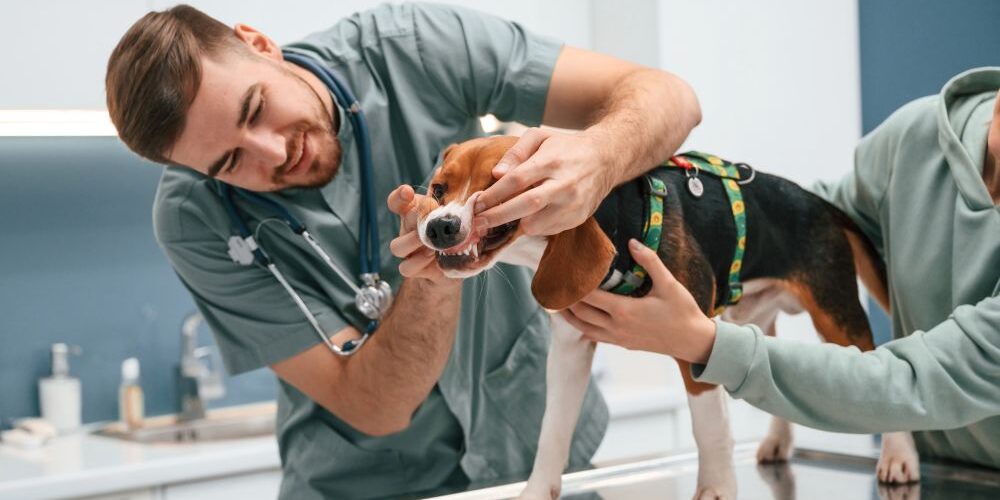
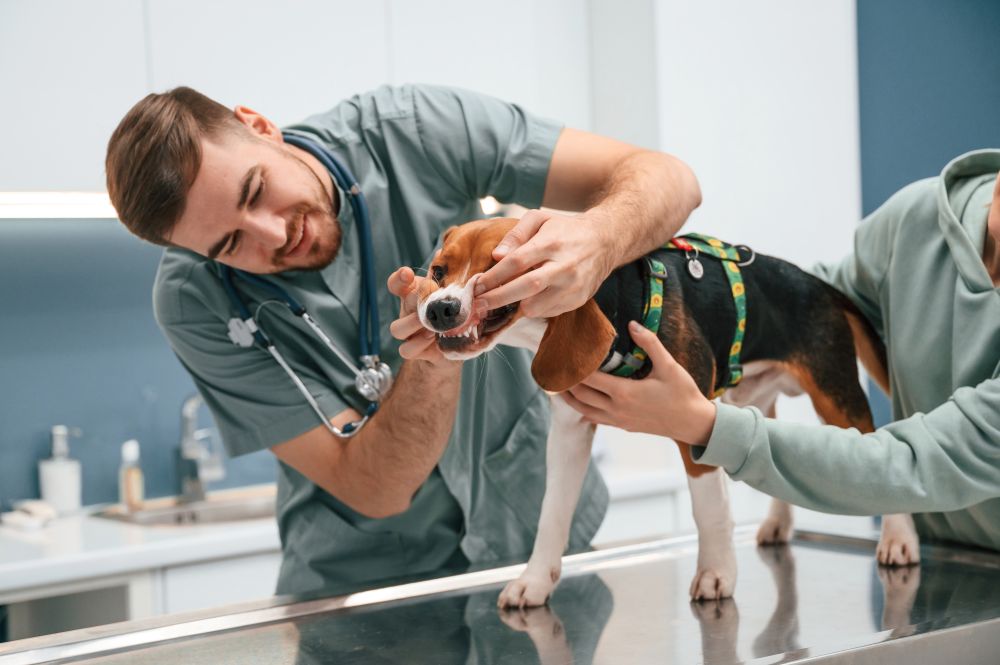
My neighbor Dana used to joke that her one-year-old Beagle, Tucker, had “selective hearing.” He’d bolt after any scent within a quarter mile, mark the mailbox like it owed him money, and once tried to hop the fence mid-walk because a female dog three yards down was in heat. She didn’t think much of it until her vet asked, at a routine visit, “Has anyone talked to you about neutering?” That one question changed how she thought about Tucker’s behavior entirely — it wasn’t stubbornness. It was hormones.
If you’re noticing something similar in your own dog, you’re not imagining it. There are real, observable signs your male dog needs to be neutered, and most of them show up well before a vet brings it up.
Behavioral Signs That Show Up First
Testosterone drives a lot of what looks like “personality” in an intact male dog, especially between six months and two years old.
- Marking indoors. Not just outside — on furniture legs, doorframes, even guests’ bags. This is scent-based territory marking, and it tends to escalate rather than fade.
- Mounting behavior. Toward other dogs, people, pillows, whatever’s nearby. It’s not always sexual; it’s often a stress or dominance response, but it’s still hormone-linked.
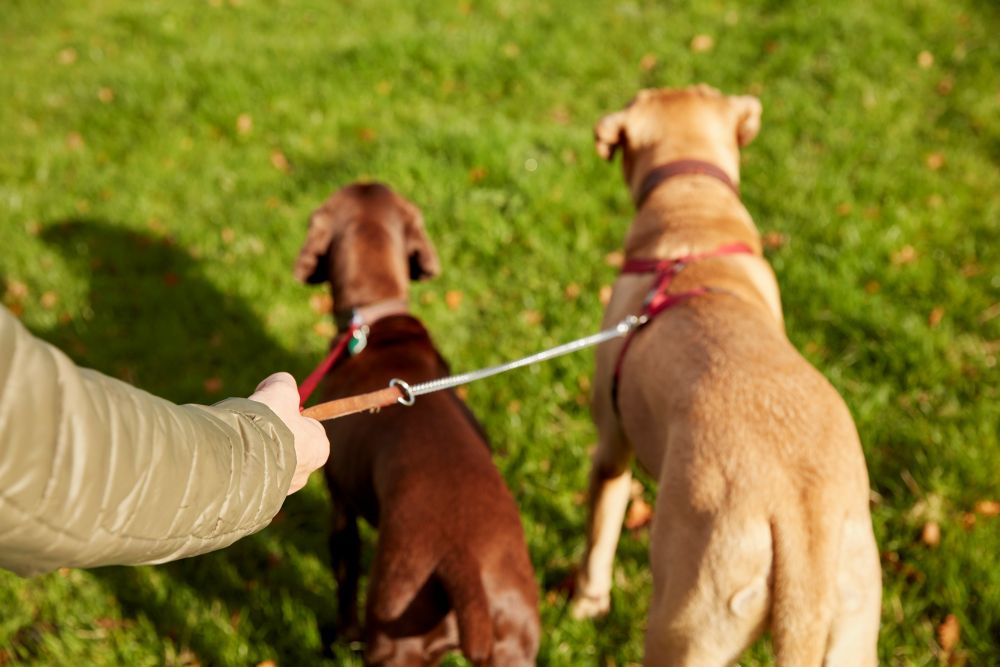
- Escaping or roaming. Dogs that suddenly start digging under fences or slipping out doors are frequently chasing scent trails from females in heat, sometimes from over a mile away.
- Reactivity toward other male dogs. Leash aggression or tension specifically with other intact males, even when your dog is normally social.
According to the American Veterinary Medical Association, roaming and mounting behaviors drop significantly after neutering in the majority of dogs, though the exact percentage varies by breed and age at the time of the procedure.
Physical Signs Worth Watching
Behavior isn’t the only clue. A few physical changes are worth a vet visit on their own:
- Testicular swelling, asymmetry, or a lump. Testicular tumors are one of the more common cancers in intact male dogs, and neutering removes that risk entirely.
- Enlarged prostate symptoms — straining to urinate or defecate, or a change in stool shape — often show up in unneutered dogs over five years old.
- Perianal masses or hernias, which are more common in intact males and are hormone-influenced.
Timing Matters More Than People Think
There’s no single “correct” age. Smaller breeds are often neutered around six months, while some large and giant breeds benefit from waiting until 12–18 months so growth plates finish developing. Studies on breeds like Golden Retrievers and Labradors have linked very early neutering to a higher rate of certain joint issues, which is why more vets now recommend a breed-specific timeline instead of a blanket rule.
Dana ended up waiting until Tucker was 14 months, on her vet’s recommendation, since Beagles are a medium breed without the same growth-plate concerns as larger dogs. “Within a month of the surgery, he stopped trying to Houdini his way out of the yard,” she told me. “I wasn’t expecting that fast a change.”
A Quick Story From a Vet Tech
Marcus, a vet tech at a mixed-animal clinic in Ohio, told me the number one thing owners say after the fact is some version of “I wish I’d done this sooner.” He estimates that in his clinic, roughly 7 in 10 behavior-related neuter consults involve marking or mounting complaints that owners assumed were just “how the dog is.” Most of the time, it’s hormonal, and most of the time, it’s manageable.
FAQs
What age should I neuter my male dog? It depends on breed size. Small and medium breeds are commonly neutered around 6 months; large and giant breeds often wait until 12–18 months to support joint development. Your vet can give a breed-specific recommendation.
Will neutering change my dog’s personality? It typically reduces hormone-driven behaviors like marking, mounting, and roaming, but core temperament and energy level usually stay the same.
Is marking always a sign my dog needs to be neutered? Not always, but persistent indoor marking in an intact male, especially after 6 months of age, is one of the most common signs your male dog needs to be neutered.
Does neutering stop aggression completely? It can reduce hormone-driven aggression toward other male dogs, but it isn’t a guaranteed fix for all aggression, especially if it’s fear-based or learned.
Is the surgery risky? Neutering is one of the most routine procedures in veterinary medicine, with a very low complication rate when done by a licensed vet on a healthy dog.
If you’re seeing two or more of these signs, it’s worth a conversation with your vet — not because something is “wrong” with your dog, but because you now know what’s actually driving the behavior.